Beginners Guide to Setting Up your Calories and Macronutrients
- Peter Tsikas

- Jan 8, 2019
- 2 min read
If you follow some form of fitness page or blog about nutrition, the word macronutrients has bound to come up or will come up in the future.
But the real question is "what is a macronutrient?" and "how do I know I'm having enough?"
To settle any confusion or potentially any misinformation on the topic, I'm going to detail for you the basics of what each macronutrient does for the body and how much is optimal for you.
What are Macronutrients?
Simply, macronutrients provides our body with basic nutrients and energy needed to survive. Each macronutrient yields a certain amount of calories per gram:
- 1g of Protein = 4 calories - 1g of Carbohydrates = 4 calories - 1g of Fat = 9 calories
Protein
Protein is a molecule of amino acids that is essential for all cells in our body. Protein uses these amino acids to build and repair various parts of the body and most noticeably, muscle. Your body needs protein to maintain a good immune function, optimise your hormones, detoxification system and organ function.


Fats
Fats are essential to the production of male and female hormones, control growth, support the immune systems and fundamental to brain function.


Carbohydrates
Carbohydrates are broken down into glucose and is the preferred source of fuel for the body as it is easily broken down to create energy.


Reading Nutrition Labels

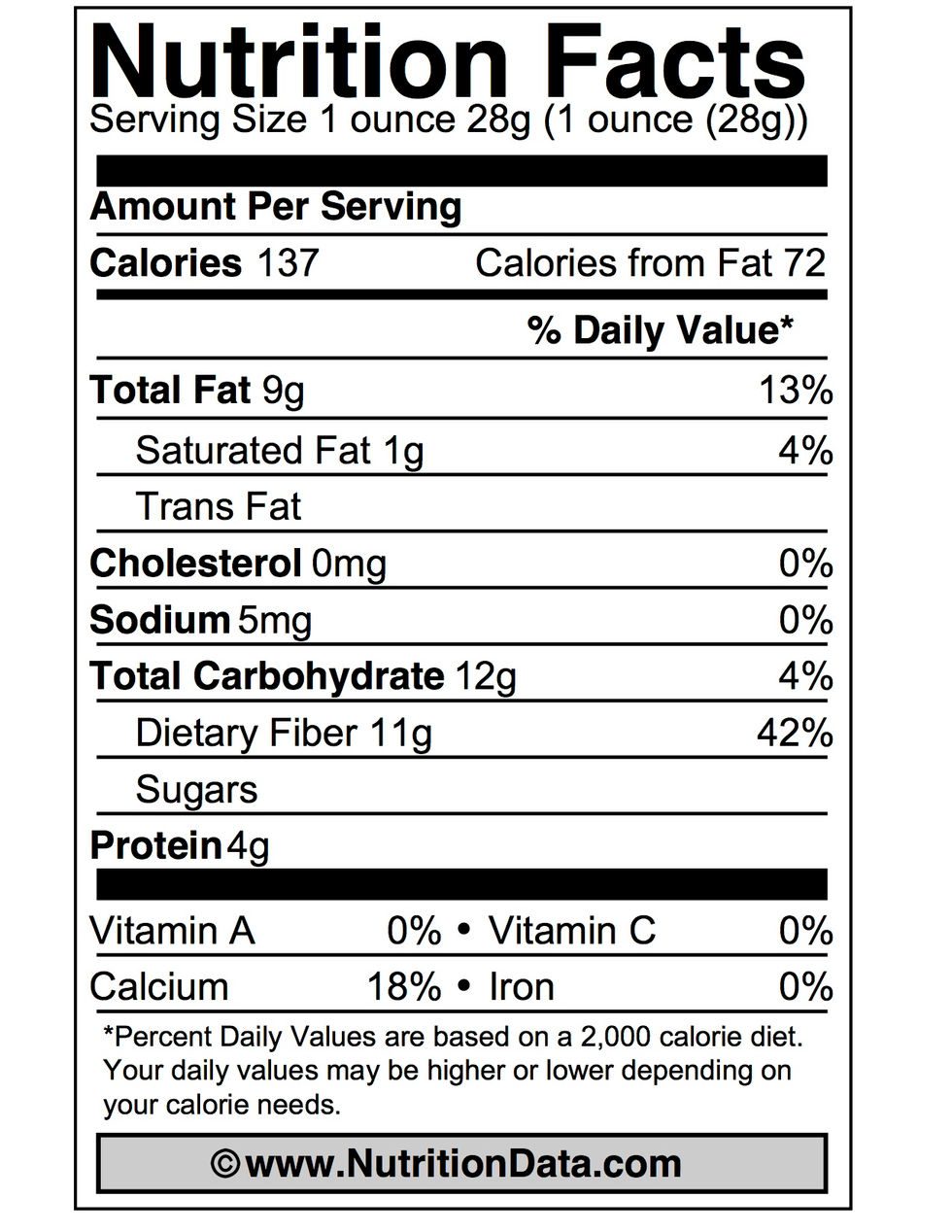
The above nutrition label shows in grams the content of protein, fats and carbohydrates:
Protein 4g = 16cals Fats 9g = 81cals Carbs 12g = 48cals
Total = 145cals (note: on nutrition labels they round either up or down from macronutrients so pay attention to macronutrient totals)
Finding your Total Calories & Macronutrient Split
Basal Metabolic Rate = what you burn in calories to keep your organs functioning when you're sitting down/doing absolutely nothing.
You can find yours by clicking the link and typing in the details: https://manytools.org/handy/bmr-calculator/
Once you've found your total calories for the day, you need to work out whether you want to:
1. Drop body fat = Calorie Deficit (burn more calories than you consume)
2. Build Muscle/Strength = Calorie Surplus (consume more calories than you burn)
DO NOT go under your BMR!
You need calories to maintain healthy organ and bodily functions!
Now your macronutrient breakdown.
Guidelines:
Protein (g) = 2 x Bodyweight (kg) Fat (g) = 1 x Bodyweight (kg) Carbs (g) = whatever you have left for calories and divide it by 4.
So if you were 80kg with a daily 2000 calorie BMR:
Protein = 160g/640cals Fat = 80g/720cals Carbs = 2000-640-720 = 640cals/4 = 160g
The above is just a guideline but most important macronutrient to keep consistent is protein then fibre (approximately 10g/1000cals) content for the day with carbohydrate and fat making up the rest of your calories, so if you prefer more fat in your diet, you can increase it while decreasing carbohydrates and vice versa for body composition.
Best app for tracking your calories and macronutrients is by far MyFitnessPal and is FREE to download and user friendly.


Like anything, it is important to be consistent with your calories, monitoring how much you eat, how your body feels, how much energy you have throughout the day and how your body is responding physically to make any adjustments from there.


Comments